Printed fromJewishGardens.com
ב"ה

Our Blog

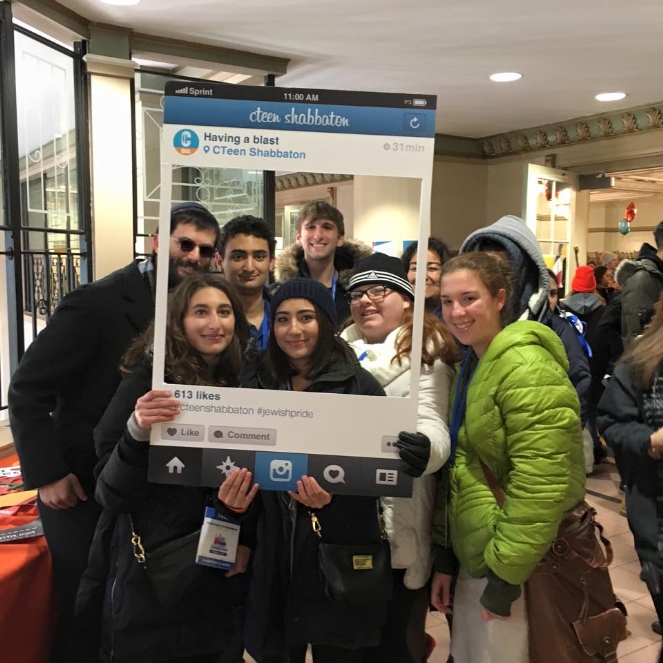
A magical Shabbat with 2000 Teens from 6 continents


 ChabadCteen.jpg Cteenpic.jpg

Life is like a picture postcard.

It might have been a while, but you surely remember what it's like writing a postcard from your vacation getaway. At first, you're not quite sure what you want to say, so you write regular sized letters. As you progress, new ideas come to mind, so you write a little smaller to make sure you can fit it all in. Yet more ideas come to mind and as the remaining space continues to diminish, you write ever smaller, ultimately crawling up the side and over the other side of the postcard, until the microscopic letters have managed to squeeze in every last idea you wanted to say.

Our lives are like that too. When we're young, we think, indeed we're certain, that we have all the time in the world to do whatever our hearts desire. With reckless abandon, we do whatever we want, whenever we desire. Just like the beginning of a postcard. As we mature, we begin to realize that our days aren't quite as limitless as we'd like to think. We begin to live a little more consciously, lives a little more focused on our purpose. As we grow even older, it becomes quite clear to us that we have little time left to accomplish all the great things we would still like to do. We begin to cram things in, trying to make each day count, just like the final scribbled lines on the wring side of the postcard.

If only, we could have planned better when we were young. If only we could've budgeted properly, we would've had all the time and space that we needed.

Time is our most precious resource. No one is wealthy when it comes to time. Each moment can be wasted thoughtlessly or applied preciously.

Just last week, as I was studying a particularly deep and sensitive topic with a group of ladies, they expressed dismay that they 'hadn't known this beautiful information when they were raising their kids at home'! It happens so often that we wish we knew or did something when we were younger.

The Torah portion this week provides us with the antidote to this wasteful predicament. Ki Sisa- 'Count' is the very name of the Portion. When we make each day count, then the years take care of themselves.

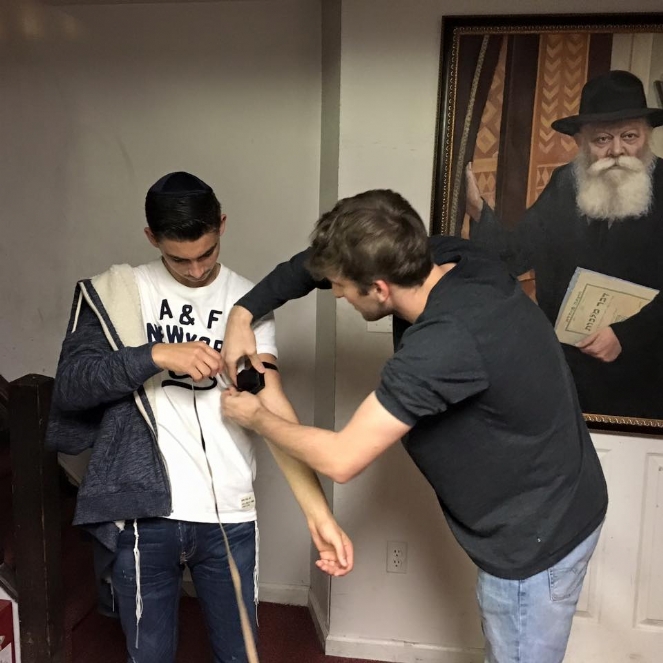
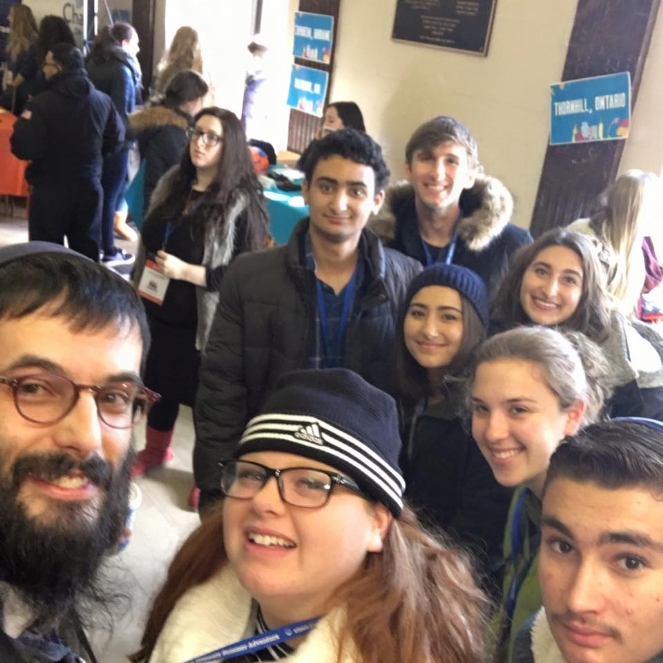
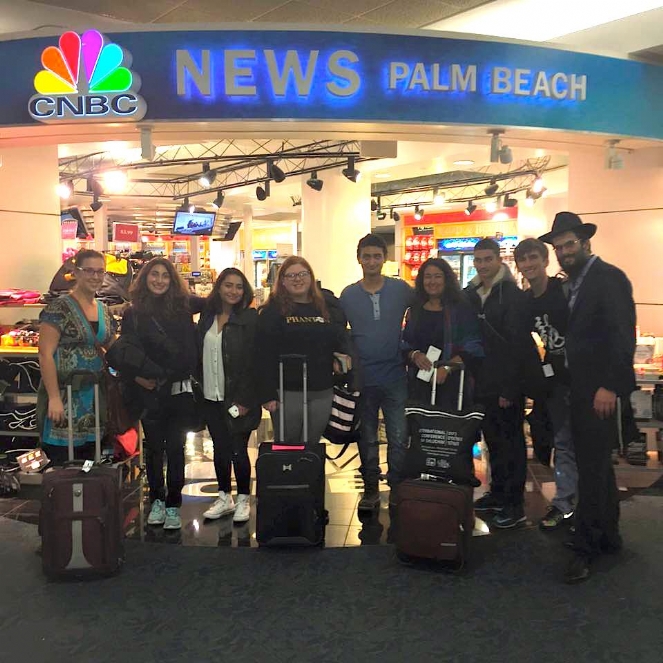
This Shabbos, I have the good fortune of leading our community's teen delegation to the international Jewish Teenagers Shabbaton in NYC, joining 2000 Jewish Teens from 27 countries and 6 continents! These teens study with me every week and are joining thousands of their peers for a magical weekend, that will embolden their spirits and kindle their souls!

Imagine the Jewish Pride when thousands of Jewish Teens dance to a Jewish Rock Concert at Times Square this Saturday Night? Picture the passion of a Friday Night Shabbos Dinner where they join in song and spirit though they don’t even speak the same language! From Madame Tussauds on Friday, the Gala Banquet on Sunday to the Rebbe’s Holy Resting place, the Ohel, these teens are learning to make their Judaism count when they’re young!

These teenagers have made smart choices to use their most precious years in discovering their Jewish identity and connecting proudly with young people their age as Jewish Leaders of tomorrow!

This Shabbos, I hope to become a teenager again myself!

Yesterday is only a dream and tomorrow is only a vision, but today well lived makes every yesterday a dream of happiness and every tomorrow a vision of hope. Today is a gift, that’s why it’s called the present!

Lets make it count. One day at a time!

cteen.jpg cteentefillin.jpg

 cteensubway.jpg cteengroup.jpg

The interesting meaning behind the Star of David

You've seen it a million times before. It's the most Jewish Symbol you can think of. But have you ever wondered why the Star of David is a Jewish symbol and what it represents?

The hexagram figure of the Star of David is believed to be the symbol that King David's valiant warriors had emblazoned upon their shields. Its profound symbolism was just as meaningful thousands of years ago as it is to us today.

The hexagram is made up of two triangles, superimposed one atop the other. These triangles represent a set of triplets that form the inseparable foundation of all of Judaism. 

Our Kaballists explain that the first triangle represents the Jewish People, who are divided into three parts: Kohanim (Priests), Levites, and Israelites.

The second triangle represents the Torah which is also divided into three parts: The written law (five books of Moses), the Oral Law (the Mishna and the Talmud) and the Secret Law (Kaballah). All three were taught by G-d to Moses on Mount Sinai and the sum of theses comprise the complete Torah.

The Star of David merges these two triangles to serve as an everlasting reminder to us that the Jewish Nation is as indivisible as the Torah that G-d gave us.

Despite the strong temptation to do so, writing off a fellow Jew for being a Trump/Hillary (take your pick) supporter or for being pro/anti a two state solution is antithetical to the essence of who we are. Breaking off a part of us is to break us off entirely. Agree to disagree but never hate your brother. United we stand and divided we fall.

Similarly, many Jews like to believe that only the five books of Moses are G-d given and everything else is but an "invention of the rabbis." Once again, the Star of David reminds us that the essence of Judaism is the unified people of Israel together with the unified Torah of Israel. All of the Jews plus all of the Torah, makes us who we are.

Tragically, there are those who will risk all to defend the People of Israel or the Land of Israel but care little for the Torah of Israel. On the flip side, there are those who will fight to the last drop of blood to stand up for the status of the Torah, not recognizing the many brethren whom they ignore or, worse yet, trample in their raging piety.

We are proud to proclaim that our community is not only engaged solely in spiritual pursuits and deepening our awareness and knowledge of Torah, but we have also gone to great lengths to care not just for the Torah of Israel but for the People of Israel too. Our recent Trump International Chabad Golf Classic tournaments have successfully sponsored the college education of almost five IDF Commandos each spending four years in college. One such scholarship recipient has flown in from Israel especially to spend a meaningful and inspirational Shabbos with us at Chabad.

The Soldiers of King David were blessed with extraordinary Divine Protection. Very few of them ever fell in battle. The brilliant leadership of their fearless teacher was to instill the visual reminder before their eyes always, that the Torah of Israel and the Nation of Israel are indivisible. Let us too learn from the timeless lesson of King David to inspire us to live as wholesome Jews today as well.

Let me know if you agree with this point

Prayer is a word that apparently evokes deep emotion in many Americans. You might be surprised to learn that more than half of Americans say that they pray daily, and that one out of five Americans prays occasionally despite identifying as secular. 

Recently, a self proclaimed sceptic in our shul, needed a miracle for his daughter. When he called me to daven for them, I knew immediately that this has to be serious. We both davened for her well being. Just weeks later when he conveyed to me the good news of her improved condition, we broke out into a spontaneous l'chaim, when even he admitted to me, that maybe, just maybe, there is power in prayer! 

But isn't prayer essentially irreligious?

Irreverent as the question may seem, praying implies that you somehow know better than G-d and that He should change His mind and His decree to concur with your own. Who do we think we are that we dare change the will of the Almighty? Sounds like a lot of chutzpah!

Upon closer analysis, we might be misunderstanding the very definition of prayer. 

The Hebrew name of anything identifies its true essence. If prayer was only about petition, it would be called bakasha. The Hebrew word tefillah is the verb for making clay into pottery: Refining raw material into function, purpose, and beauty!

When we pray, or daven, we are not asking G-d for stuff! We do that too, but that is not what it's about. To pray is to meditate. That's why the prayer book is filled with the beautiful poetry of King David, detailed descriptions of the wonders of creation, and Kabalistic reflections on the universe. We're not supposed to just read them in lip service; we're supposed to reflect deeply on them, one phrase at a time, thinking deeply about their meaning.

This meditation, typically at the very beginning of the day, synchronizes the tension between our spiritual souls and mundane bodies. All day, we are confronted with difficult choices: the morning meditations help set the spiritual tone of the rest of the day. Typically the inspiration lasts just a few hours and therefore we need to pray, to meditate and connect with the core of our being, as the sun rises once more.

Our sages thus explain how prayer works. When we are sublimated during prayer and request of G-d that He improve our fortunes, we are not changing G-d's will at all; rather, we are simply changing ourselves. The bad fortune affected the person we were before the prayer, the person we have become through the prayer meditation is not bound to the previous decree, and that's when our fortune changes for the good!

So, do yourself a favor. Reach for a siddur and read it in English. Take it slowly at your own pace. The meaning is relatively simply to understand. Find a paragraph you can connect to and read it over a few times. Then close your eyes and try to think deeply about it. Meditate. Allow yourself to be inspired by the theme and unleash the power of your G-dly soul. This will change you into a higher being, and improve your fortunes as well!

One of our best speakers this year so far!

John Wayne once said that courage isn't the lack of fear. "It's being scared to death, and saddling up anyway!"

It's not every day that we get to meet a real hero.

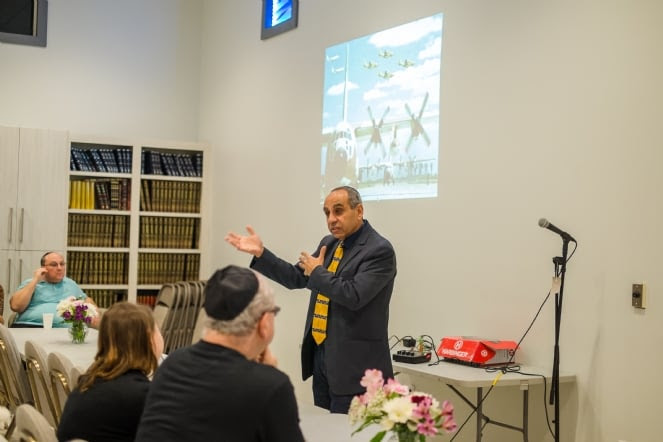
Chabad of Palm Beach Gardens had the extraordinary opportunity last week of hosting one of the IDF soldiers who rescued hostages from armed Palestinian and German terrorists in the Entebbe Raid on July 4, 1976. Sassy Reuven is soft-spoken, shy and loves to crack jokes. And he's not very broad or tall either. He is far from how you'd envision "Rambo." Yet, together with almost 250 Israeli servicemen, he followed orders to fulfill one of the most daring and successful rescue missions in recent history.

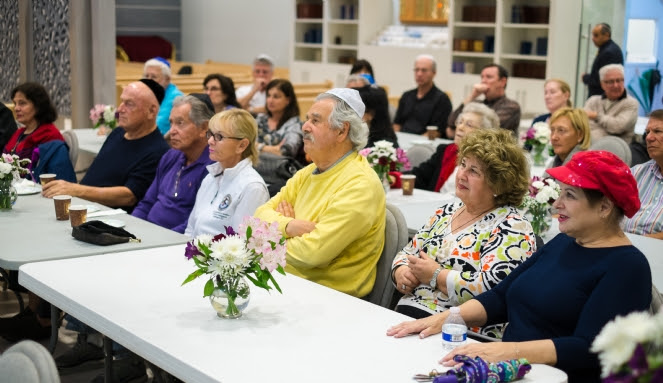
Addressing the capacity crowd at Chabad of Palm Beach Gardens, Sassy spoke about soccer games with his squad and practical jokes they played on each other just hours before embarking on a mission so dangerous they were uncertain whether they would ever return alive.

The audience was struck by his presentation, yet no one was able to put a finger on exactly what it was that touched them so deeply. It certainly wasn't the eloquence or grammar of this sabra, neither was it his poise or regal bearing. But all said that this speaker's presentation had made a deep impression on them, more so than most other speakers they have heard.

As the rabbi, I felt it was not despite his street savvy and down to earth demeanor, but specifically because of it that we were inspired. Here we were faced not with a brilliant sage or accomplished athlete but with an ordinary person, an average Joe, just like any of us. Yet he managed to change the lives of hundreds of people and Israel's image in the eyes of the world!

Sassy Reuven's presentation was deeply moving and inspiring because he showed us that it's not impressive when extraordinary people that do extraordinary things, but rather when ordinary people do extraordinary things that change the world!

He inspired to find our own voice and to discover the hero inside of each of us. Sassy inspired us to look deep into our souls and unleash the power and passion we have within us, no matter what the world, our peers, or even our own misguided perceptions might throw in our path!

Indeed, the Torah portion this week follows the Great Revelation at Sinai, where a group of vagabonds and slaves became a 'kingdom of priests' and the 'Chosen nation'. Far from the extraordinary revelations you'd have expected to follow, the Torah portion teaches a series of laws concerning murder, kidnapping, assault, theft, loans and courts of law amongst others. The simplicity of these laws reminds us too that it's our commitment to the routine details of life that will illuminate this world and bring it to its purpose!

Please enjoy the pictures below.

DSCF9987.JPG

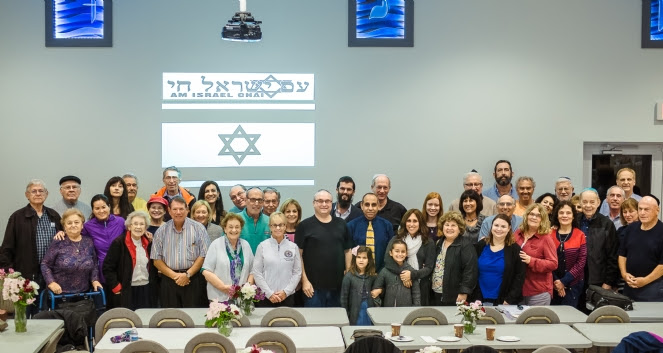
The capacity crowd listening to Sassy Reuven's presentation

DSCF9999.JPG

Sassy Reuven- IDF Commando who fought to liberate the hostages in the Entebbe Raid on July 4, 1976

DSCF9992.JPG\

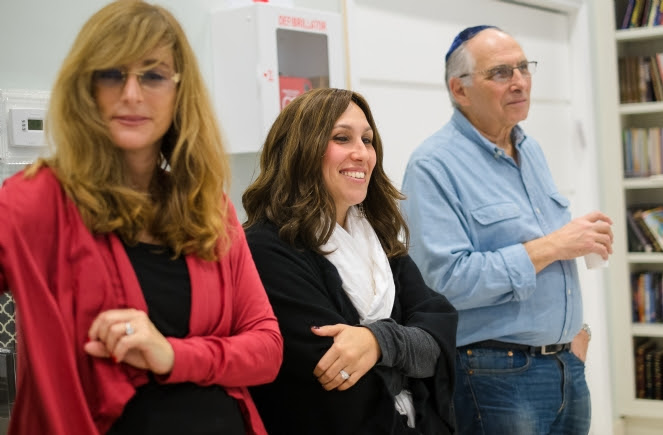
L-R: Shelly Paolercio, Chabad Rebbetzin Chana Vigler, Mickey Gottlieb

DSCF9986.JPG

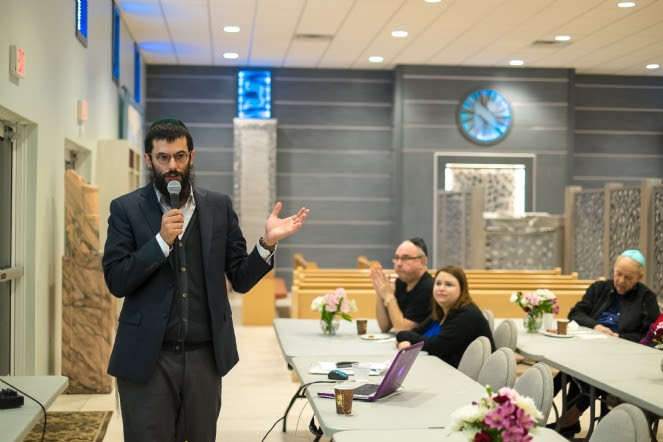
Rabbi Dovid Vigler introducing IDF Commando Sassy Reuven

DSCF0019-2.JPG

Part of the crowd that came to the lecture by IDF Commando Sassy Reuven, second solider to leave the plane at the Entebbe Aiport on July 4, 1976

More Pictures: Click here  

Looking for older posts? See the sidebar for the Archive.